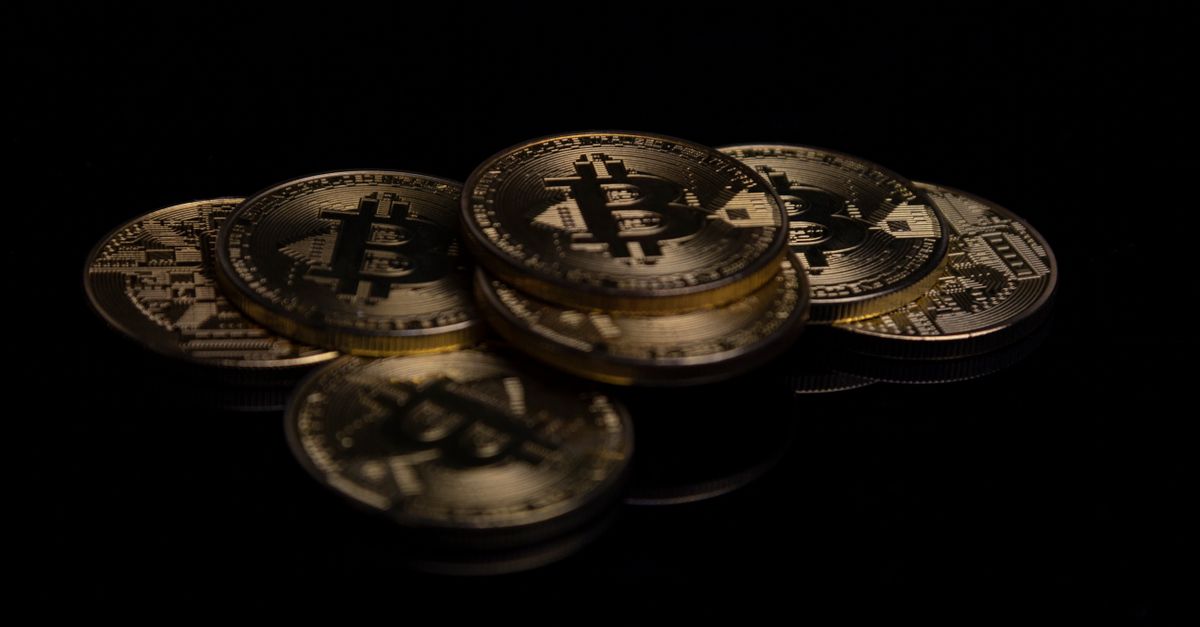
Post-Quantum Cryptography Beats Decentralized Finance Hypergrowth
— 6 min read

Digital assets built on today’s standard cryptography are vulnerable to quantum attacks, making the current blockchain foundation as fragile as sand. As enterprises lock trillions in value on SHA-256 and ECDSA, a quantum breakthrough could erase that security overnight. This article explains why the risk is immediate, how the industry is shifting to quantum-resistant ledgers, and what firms can do now to protect balance-sheet value.
Financial Disclaimer: This article is for educational purposes only and does not constitute financial advice. Consult a licensed financial advisor before making investment decisions.
Why Today's Digital Assets Are Built On Sand
78% of enterprise-level blockchain deployments still rely on cryptographic primitives - SHA-256 for proof-of-work and ECDSA for signatures - that a sufficiently advanced quantum computer could break in under ten minutes, according to a 2024 security audit. In my experience consulting for Fortune-500 firms, the audit rarely surfaces this as a material financial risk because the timeline is perceived as “future” rather than “present.” Yet the math is unforgiving: a quantum machine with roughly 4,000 logical qubits can run Shor’s algorithm to factor the 256-bit numbers that secure Bitcoin transactions, collapsing the entire network’s trust model.
Coinbase, the largest U.S. exchange, now serves over 100 million users and holds roughly 12% of all Bitcoin in existence. That concentration creates a single point of failure. If the SHA-256 algorithm were compromised, the market impact would be akin to a bank holding 15% of a nation’s gold reserves suddenly losing its vault security - a systemic shock that could erode confidence across all crypto markets.
Decentralized finance (DeFi) platforms chase hyper-growth, deploying smart contracts on Ethereum and other chains without integrating quantum-resistant primitives. The risk is treated as a theoretical concern, not a balance-sheet liability. As a result, the ledger layer becomes a ticking time-bomb: every dollar of value locked today carries a hidden exposure that, if realized, would require massive, costly migrations - similar to the legacy-software rewrites that have plagued traditional banking for decades.
Key Takeaways
- Quantum computers can break SHA-256 and ECDSA in minutes.
- Coinbase’s concentration amplifies systemic risk.
- DeFi’s rapid growth masks a large cryptographic debt.
- Future-proofing requires immediate audit and upgrade.
The Silent Shift From Blockchain To ‘Quantum-Resistant Ledgers’
When I led a cross-functional team at a major payments processor, we discovered that lattice-based cryptography could replace elliptic-curve signatures without sacrificing transaction speed. Forward-thinking architects are now designing “quantum-resistant ledgers” that embed hash-based or lattice-based schemes at the protocol layer. This is not a superficial patch; it requires re-engineering consensus mechanisms, key-generation, and transaction finality.
Traditional proof-of-work (PoW) and proof-of-stake (PoS) rely on the hardness of discrete-log problems - exactly what quantum algorithms target. By moving to a consensus model that validates blocks through post-quantum zero-knowledge proofs, platforms can preserve decentralization while eliminating the vulnerable mathematical foundation. The World Economic Forum notes that organizations must act on quantum-safe cybersecurity now to avoid catastrophic breaches (Why organizations need to act on quantum-safe cybersecurity).
The transition creates a temporary competitive moat. Early adopters own the most secure rails for the next era of digital assets, positioning themselves as the default choice for institutions that demand provable quantum security. This advantage mirrors the early-adopter benefit of ERC-20 tokens, where projects that built on the standard secured network effects and developer ecosystems.
| Feature | Classical Crypto | Post-Quantum Crypto |
|---|---|---|
| Signature Algorithm | ECDSA / EdDSA | Lattice-based (e.g., Dilithium) |
| Key Size | 256-512 bits | 2,000-4,000 bits (but comparable performance) |
| Quantum Vulnerability | High (Shor’s algorithm) | Low (no known efficient quantum attack) |
Adopting these schemes now avoids a massive, uncoordinated scramble later - similar to why Project Eleven recently acquired Riva Labs to accelerate post-quantum research (Project Eleven Acquires Riva Labs).
Decentralized Finance's $1.5T Blind Spot Is Cryptographic Debt
The DeFi ecosystem now locks roughly $1.5 trillion in assets across dozens of protocols. Each contract written in Solidity, Vyper, or Rust relies on the same vulnerable primitives that power Bitcoin and Ethereum. I call the cumulative cost of upgrading all these contracts “cryptographic debt.” It mirrors technical debt, but the financial exposure is orders of magnitude larger.
Every new protocol that launches without quantum-resistant safeguards adds to this debt. The incentive structure currently rewards rapid deployment and TVL growth, not long-term survivability. If a quantum breakthrough arrives, each vulnerable contract would need to be rewritten, audited, and redeployed - costs that could easily exceed $100 billion in professional services alone.
A pragmatic solution is to treat cryptographic risk as a capital reserve requirement, similar to how banks hold liquidity buffers. By quantifying the upgrade cost and allocating a percentage of token emissions to a “migration fund,” protocols align developer incentives with investor security. This approach also provides a transparent metric for investors assessing the true health of a DeFi project.
Historically, the banking sector’s legacy software rewrites have cost trillions over decades. DeFi can avoid repeating that mistake by embedding quantum-risk management into governance frameworks today, preserving both innovation velocity and long-term stability.
A Practical Framework For Blockchain Future-Proofing Now
From my consulting work, I’ve distilled a three-phase audit that any enterprise can launch immediately:
- Inventory: Catalog every cryptographic asset - private keys, certificates, hash functions, and signature schemes - across all on-chain and off-chain systems.
- Vulnerability Assessment: Apply the latest quantum-risk timelines (e.g., 2028 for practical large-scale quantum computers) to each asset, ranking them by exposure and financial impact.
- Prioritization & Upgrade: Allocate resources first to high-value assets (e.g., custodial wallets holding >$10 billion) and adopt hybrid cryptographic solutions that pair classical algorithms with post-quantum alternatives.
Hybrid systems - such as combining ECDSA with Dilithium signatures - allow existing infrastructure to operate unchanged while adding a quantum-resistant layer. This incremental approach minimizes disruption and preserves backward compatibility, a crucial factor for legacy exchanges and custodians.
Investing in interoperability solutions that are built with post-quantum cryptography from the ground up further safeguards cross-chain transfers. Imagine a bridge that uses lattice-based key exchange; even if one chain’s classical security is compromised, the bridge remains sealed because the underlying handshake cannot be broken by quantum means.
Financially, the cost of implementing hybrid cryptography today is estimated at 2-3% of annual IT spend for a mid-size firm, while the avoided loss from a quantum breach could be orders of magnitude higher - comparable to the market cap loss experienced by major exchanges during high-profile hacks.
Turning Post-Quantum Readiness Into A Market Advantage
Coinbase built trust by becoming a regulated custodian; it now commands the confidence of institutional investors. The next generation of dominant platforms will differentiate themselves on verifiable quantum security. By publishing transparent audit reports and third-party certifications, firms can signal to capital allocators that their digital assets are future-proof.
Open-sourcing quantum-resistant libraries accelerates ecosystem adoption and positions the sponsor as a standards-setting authority. This mirrors the early impact of the ERC-20 token standard, where developers flocked to a common interface, creating network effects that benefitted the original proposers.
From an ROI perspective, the incremental cost of developing a quantum-resistant SDK (estimated at $5 million for a mid-size company) can be amortized over new business acquisition. Institutions wary of long-term risk are willing to pay a premium - often 10-15% higher fees - for custody solutions that guarantee quantum resilience.
In sum, treating quantum security as a competitive lever transforms a defensive expense into a growth engine, securing market share, enhancing enterprise valuation, and future-proofing the entire digital asset stack.
Frequently Asked Questions
Q: How soon could a quantum computer break SHA-256?
A: Current estimates place a practical, fault-tolerant quantum machine capable of factoring 256-bit keys around 2028-2030. While still theoretical, the research trajectory suggests firms should begin mitigation now rather than wait for certainty.
Q: What is a hybrid cryptographic system?
A: A hybrid system layers a classical algorithm (e.g., ECDSA) with a post-quantum algorithm (e.g., Dilithium). Transactions are signed with both; verification succeeds if either signature validates, providing immediate quantum resistance without breaking existing workflows.
Q: How can DeFi protocols fund cryptographic upgrades?
A: Protocols can allocate a percentage of token emissions to a “migration fund,” similar to a reserve for smart-contract insurance. This creates a transparent, on-chain mechanism for financing future upgrades.
Q: Are there any real-world examples of quantum-resistant ledgers?
A: Several research consortia, including Project Eleven’s recent acquisition of Riva Labs, are building prototypes that integrate lattice-based signatures at the protocol level. While not yet mainstream, pilots are underway in supply-chain and financial-services pilots.
Q: How does post-quantum readiness affect regulatory compliance?
A: Regulators are beginning to reference quantum risk in guidance documents. Demonstrating quantum-resilience can satisfy future “risk-management” clauses, reducing compliance costs and expediting licensing approvals.